We're All DataFam
The community didn’t shrink. The room did.

During the Day 1 keynote at Tableau Conference, the new General Manager of Tableau, Mark Recher, asked DataFam to stand up. He had been in the role for less than 60 days.
A handful of people stood. Mostly folks you’d recognize. Community leaders. Ambassadors. Visionaries.
That moment stuck with me all week. Not because people didn’t stand, but because I think a lot of people didn’t realize they could.
Some people I talked to thought he was only talking to Ambassadors or Visionaries. In that moment, it didn’t feel like it was meant for them, or clear that they were supposed to.
To be clear, I had a chance to talk with Mark this week. He’s thoughtful, approachable, and genuinely seems to get the community. This isn’t about that moment being wrong. If anything, it’s what it revealed.
I’ve seen a lot of conversation this week about DataFam. Some people saying it feels tired. Some saying people don’t really know what it means anymore. Some newer users not even familiar with the term at all. Others assuming it’s something tied to Ambassadors or Visionaries, not something they’re part of.
And honestly, I get it. Because if you didn’t experience how it evolved, it’s easy to misunderstand what it is.
DataFam didn’t start as some grassroots movement. It started as a marketing term. A hashtag. Something Tableau introduced during its growth years.
That matters. And so does who was behind it.
Elissa Fink joined Tableau in 2007, when the company was still small. Under $5 million in revenue. Fewer than fifty people. She became CMO in 2011 and stayed through the IPO, through hypergrowth, all the way to over a billion in revenue before retiring in 2018.
But what made her impact different wasn’t just the growth.
She understood something early. People weren’t just using Tableau. They were excited about it. Sharing it. Talking about it. Teaching each other.
She saw that and leaned into it. Her job wasn’t to manufacture a community. It was to recognize that one already existed and make sure it was seen.
She positioned the brand around people. Their stories. Their work. Their wins. Not just features.
And Tableau backed that up. You saw it at conference. You saw it online. You saw it in how people were highlighted.
That mattered because it made the community visible. It gave people something to connect to. That’s the environment DataFam grew out of.
For those of us who were around then, it was obvious. The community wasn’t an add-on. It was the strategy.
It’s also worth saying this.
The community team at Tableau is incredible. They do a ton of work behind the scenes, more than most people probably realize. They show up at conference, keep things running all year, and create space for people to connect.
And they care. You can feel it. They get what makes this community special, and they are a big part of why DataFam is still here.
It doesn’t just happen on its own.
Back then, a lot of this lived out in the open. Twitter was the hub. That’s where conversations happened, where people shared work, and where you could jump in, reply, meet people, and keep it going.
Tableau amplified it. You’d see tweets during conference. It felt connected.
They even showed tweets on the screens before keynotes. While you were waiting, you’d see people posting about the conference in real time.
I remember tweeting something and then looking up to see if it would show up. It sounds small, but it made it feel like you were part of it.
You didn’t need an invite. You just showed up. And if you stuck around, you started to feel it.
That’s when DataFam had its clearest meaning. Not a title. Not a program. Just how people treated each other.
Today, it’s different.
There are more people, but not necessarily in the same place.
In-person conference is smaller than it used to be. At its peak, there were close to 20,000 people in the room. Now it’s a fraction of that.
And this year, it was noticeable. Fewer international members made it. People who are usually part of that room weren’t there. The political climate made travel to the US harder. That was real, and it was felt.
At the same time, more people are tuning in virtually than ever. So the community may be bigger overall. It’s just not all in the same room anymore.
And that changes how it feels.
People left Twitter. Some moved to Slack. Some to LinkedIn. Some tried other platforms that didn’t really stick. The community is still there. It’s just spread out.
We used to all be in the same room. Now we’re in a bunch of different rooms. And when you’re in the same room, it’s easier to know you belong.
To Tableau’s credit, they are trying to bring some of that back. There’s a real push to use Slack as a more central community hub.
And it makes sense. Slack creates space for conversation. It brings people together.
But it’s different.
On Twitter, everything was out in the open. You could see conversations happening, see people helping each other, and stumble into it without trying.
Slack is different. You have to know where to go. You have to be in the right space to even see it.
So even though the community is there, it doesn’t always feel the same. It works. It just feels different.
If you're not already there, you can join at tableau.com/community/slack. I'm in there regularly.
That difference is easy to see now.
If you can’t see the community happening, it’s harder to understand how to be part of it. Back then, you could watch it in real time. Now, if you’re not already in the right places, it’s easy to miss.
To be clear, I didn’t get this right away either.
When I went to my first few Tableau Conferences, I didn’t engage. I went to sessions, took notes, and focused on learning. I didn’t talk to people much. I was too shy.
Every year I’d leave energized, telling myself next year would be different.
Before the 2019 conference, it finally was.
I started small. I connected with people on Twitter and participated in Makeover Monday, Project Health Viz, Sports Viz Sunday, and Iron Quest. Nothing big. Just showing up.
But something changed.
I started letting the people I was meeting shape my experience. I started reaching out to people I recognized from the community and started conversations. Then I kept those conversations going.
That’s when it clicked for me.
Around that time, I came across something Lindsay Betzendahl wrote about finding your tribe. That idea stuck with me.
https://vizzendata.com/2018/11/02/finding-your-tribe/
Your “tribe” is a group of people, or a community, with similar values or interests. A place you belong, where you are heard, and where you can make a difference. That sounds easy enough, but what isn’t as easy is the realization that whatever you do to find your tribe, do it your way and on your time. Find those few, or many, people that resonate with you, bring you joy, and spark your passion. - Lindsay Betzendahl
DataFam wasn’t something you joined. It was something you experienced.
Then COVID hit.
Instead of losing that momentum, it got stronger.
We started doing game nights as a way to stay connected. We’re still doing them, monthly, years later.
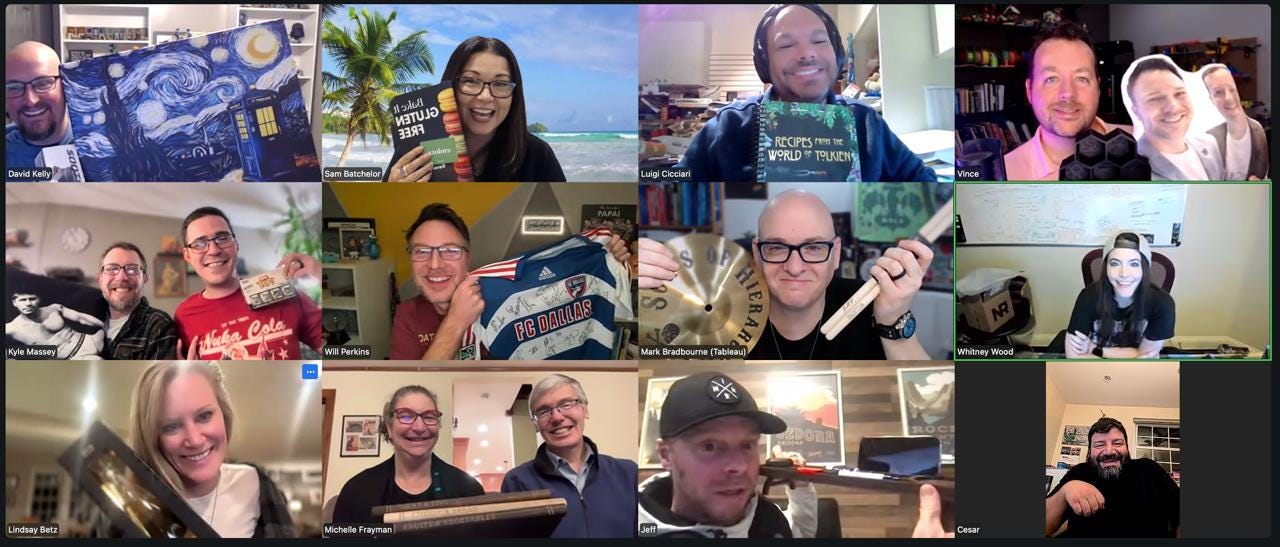
Then conference went virtual.
We didn’t just watch it. We hung out during it together.
At one point, Vince Baumel said if it’s virtual again, we should just get a place and do it in person.
Next year, it was virtual again. So we did it.
We rented a cabin in Gatlinburg, Tennessee. What became known as the DataFam Cabin.
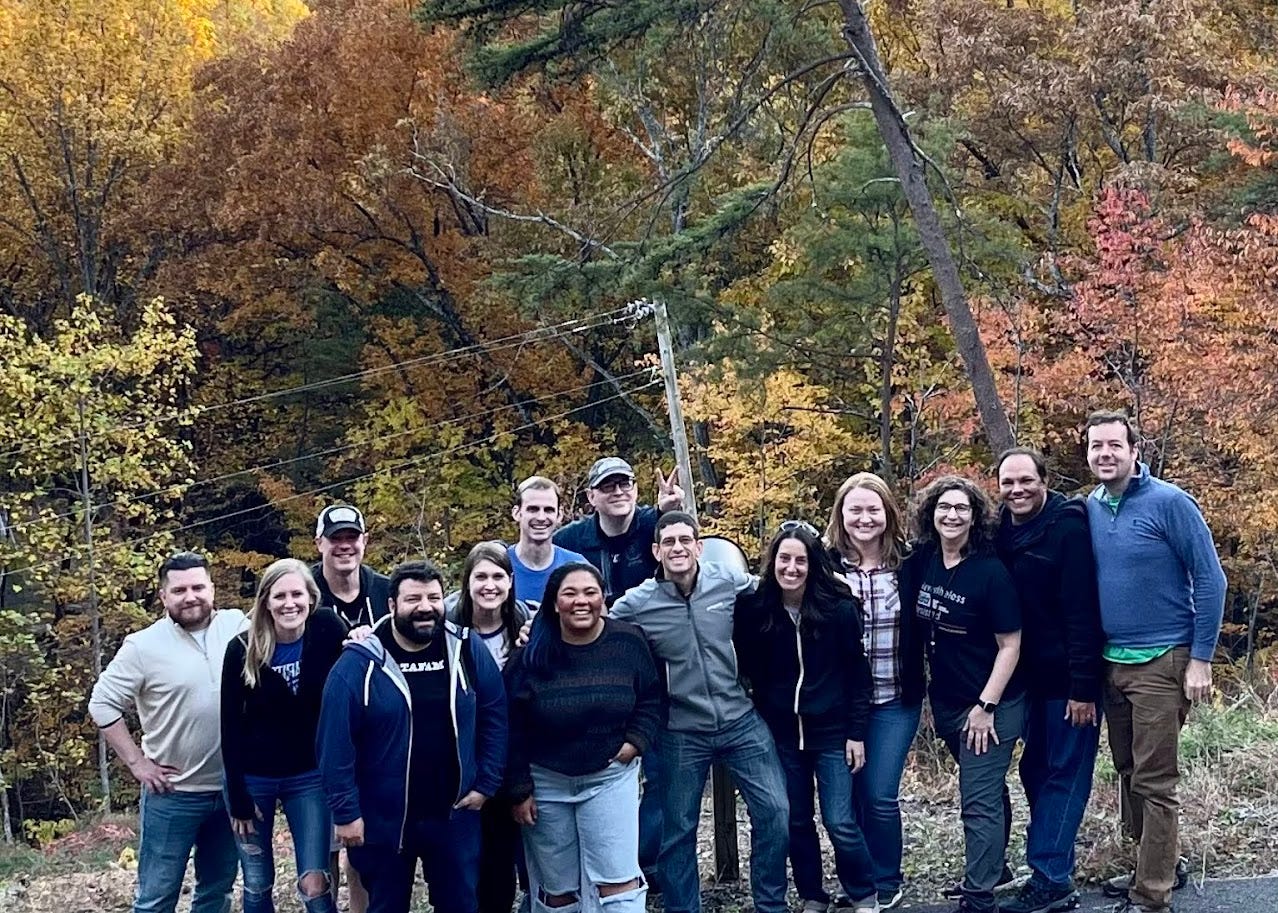
We spent a week together watching conference, talking, and hanging out. That week meant more to me than any session I’ve ever attended.
It didn’t stop there.
We’ve done trips since. Orlando a couple years later. San Diego, getting an Airbnb the weekend before conference.
Now conference feels like a reunion.
We celebrate everything. Births, weddings, wins, hard times. If we’re traveling and near each other, we meet up.
It’s not just a conference thing. It’s part of our lives.
So when I hear people say the term feels tired or that people don’t really know what it means anymore, I understand where that’s coming from.
But I don’t think the meaning is gone. I think it’s just harder to see.
When Mark asked DataFam to stand, and only a few people did, it didn’t feel wrong. It just felt incomplete.
When you can’t see the whole community, it’s easy to assume it’s smaller than it is. It’s easy to think it’s just the people on stage.
I don’t think that room was short on DataFam. I think a lot of people just weren’t sure if they were part of it. And honestly, there was a time I wouldn’t have stood either.
I went to multiple conferences where I didn’t engage. I stayed in sessions, took notes, and tried to figure things out on my own. I’d leave energized, but still on the outside of it. I didn’t feel like I was part of anything yet.
But I was. I just didn’t know it.
That’s the part I keep coming back to.
Because DataFam isn’t something you join all at once. It builds. It starts small. A conversation, a reply, a viz you decide to share, someone you meet once and then again.
Over time, it becomes something bigger.
For me, it became friendships. Game nights. Trips. A cabin in Gatlinburg. An Airbnb in San Diego.
People I talk to every month. People I show up for, and who show up for me.
It became real.
And that doesn’t mean it has to look like this for everyone.
You might not find your closest friends through this. Most people won’t. And that’s okay.
But you will find people who want to help. People who genuinely want to see you do well. People who will answer questions, share ideas, and show up when you need it.
That’s what DataFam is at its core.
DataFam may have started as a marketing term.
But it didn’t stay that way.
And if you’ve ever been part of any of this, even a small piece of it, you’re DataFam.
Whether you stood up or not.
If this resonates, I’d love to hear how you found DataFam.
Such a great post, Luigi! For me, the DataFam is always having a friend to sit with at conference or to walk you safely back to your hotel. It's the times when I stopped a TC Newbie acquaintance while they walked past my friends and invited them to dinner. It's the instant replies on socials or group chats when someone in the smaller tribe needs help, and the bigger efforts like the Visionaries' blogs and videos making it possible to do more with Tableau at work.
I think overall, what the DataFam gives analysts who may feel a bit isolated in their roles (ever been called The Data Guy at work?) is a place where they are welcome and included and where people are happy to see them and want them to feel good. What a gift!
I couldn’t agree more. When the “DataFam” were invited to stand, I leapt to my feet immediately — after all, Tableau has been a major part of my life for going on 15 years now — and then realized with embarrassment that I was one of only a few staff standing.
Yet perhaps this was just a goof on our part in terms of giving instructions clearly. We’ve always intended for DataFam to be an inclusive term. Next time, I’d expect we’d all stand.